NEXUS: The Cycle of Creation
Narrative-Driven Concept Game Environment DesignNarrative-driven concept game environment design
NEXUS: The Cycle of Creation
Narrative-Driven Concept Game Environment Design
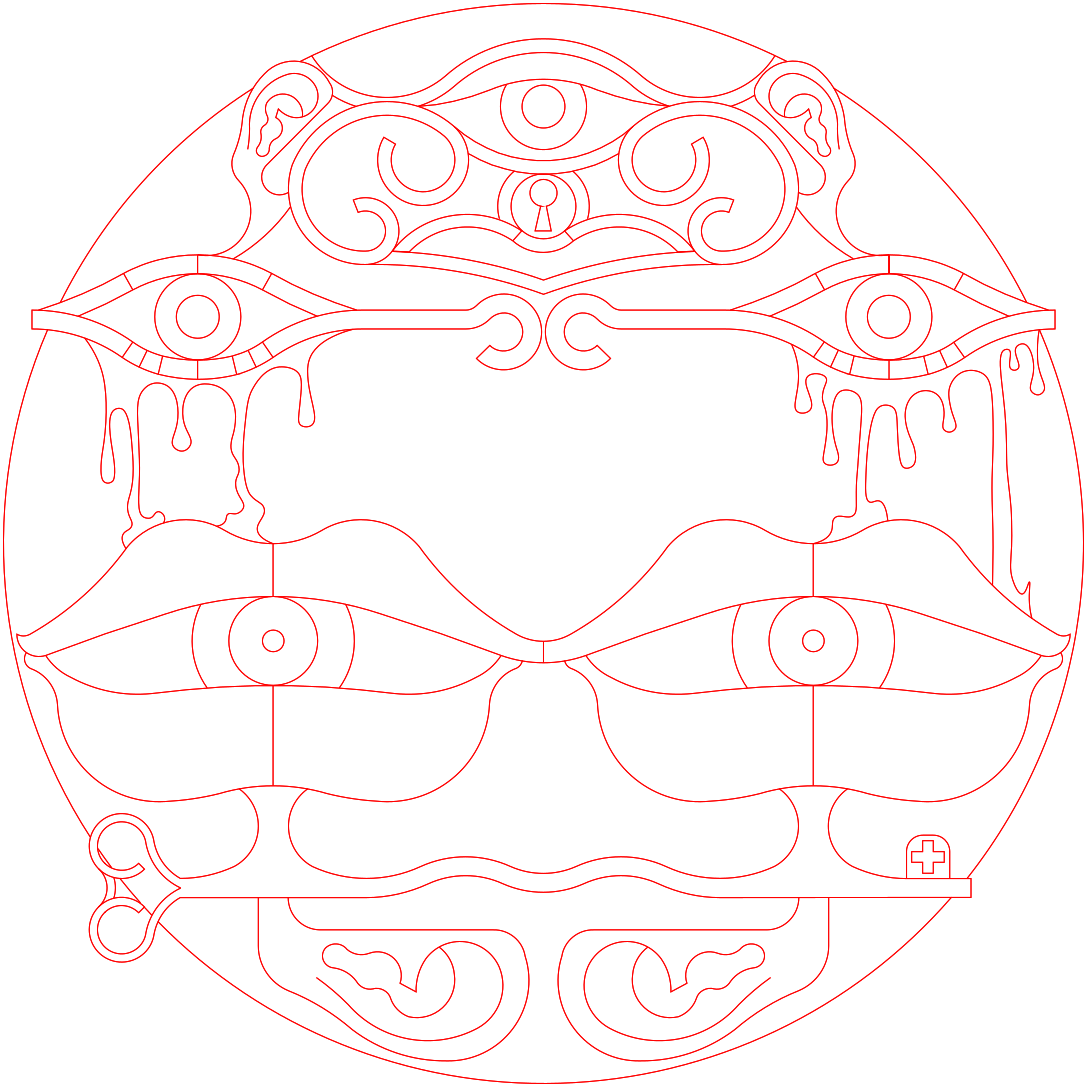
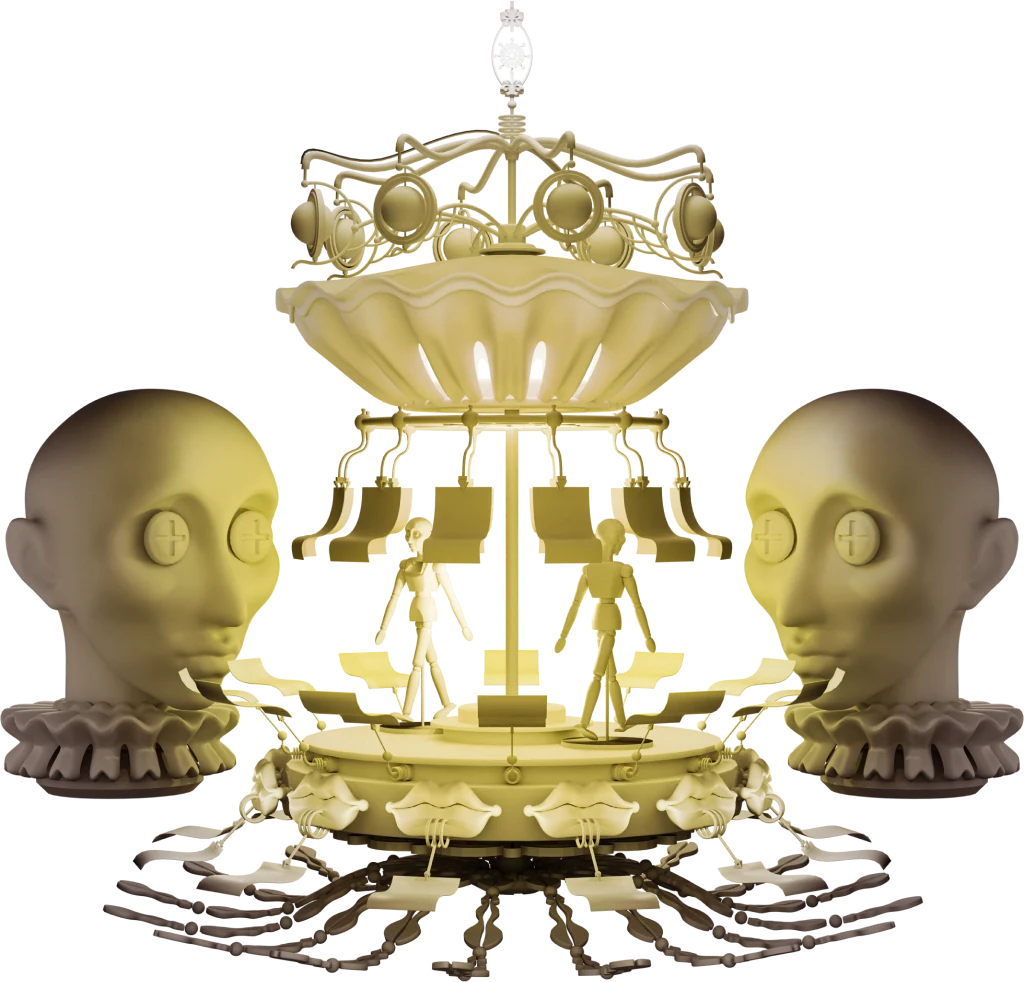
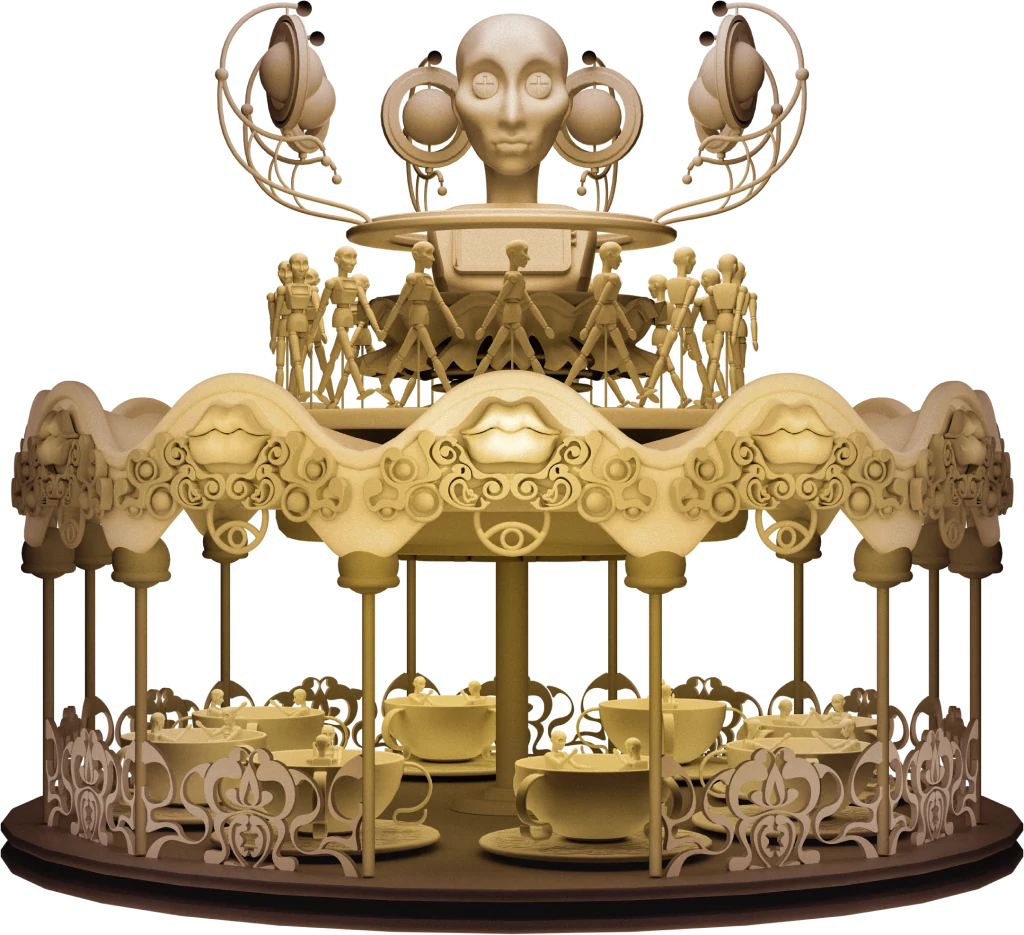
An industrial assembly line becomes a self-replicating mechanical civilisation. Mechanical rabbits and pigs pass through six connected production spaces, experiencing creation, modification, surveillance, and recirculation.
- My contribution
- Concept environments, 3D modelling, and rendering
- Project stage
- Concept design and environment visualisation
The mechanical civilisation
If a machine learns to build another machine, is it creating life—or a system?
NEXUS is a mechanical-civilisation concept design project built around self-replication. In this world, humans have long left the production system. Mechanical rabbits, pigs, and other artificial beings have taken over society, building, maintaining, and expanding their own civilisation. Every individual emerges from the same production mechanism and, as it grows, participates in creating the next generation of mechanical life.
Six systems sustain this civilisation: energy production, life creation, individual optimisation, behavioural surveillance, value judgement, and emotional programming. Together, they form a continuously cycling, self-replicating mechanical ecosystem. An industrial-fairytale visual language contrasts a lively mechanical playground with the hidden logic of control, creating a game world with both playfulness and narrative depth.
When a system no longer demands obedience because everyone obeys willingly, who has created civilisation—and who has become its fuel?
Concept Breakdown
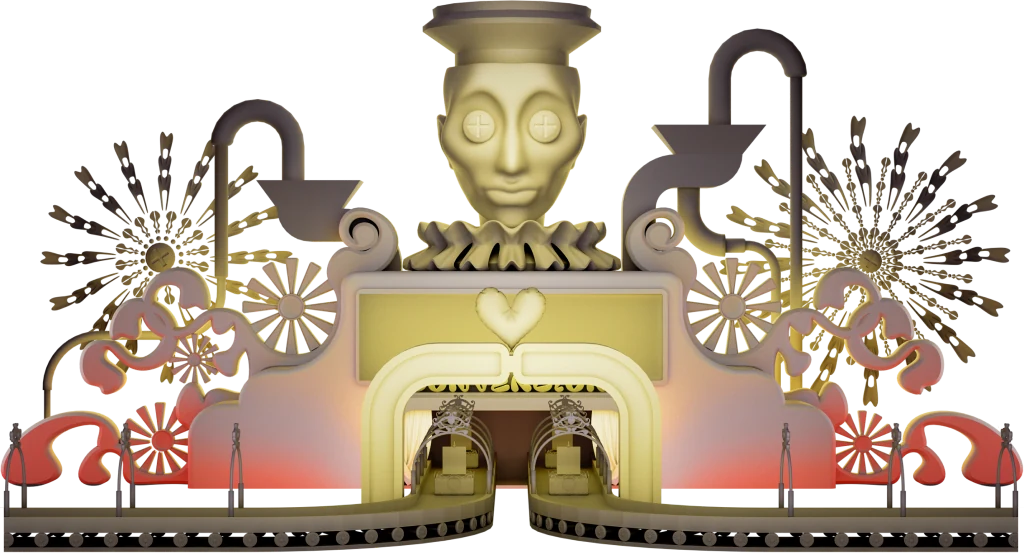
An industrial assembly line forms the project’s foundation. Modular spaces reveal how the mechanical civilisation operates through production, optimisation, surveillance, selection, and circulation. Gears, robotic arms, conveyor systems, and central controls establish a shared visual language. Industrial structures meet exaggerated fairytale proportions, balancing order with playfulness.
Mechanical Rabbit
The basic labour unit carries out manufacturing, transport, and maintenance. Circular eyes and long ears give it a recognisable silhouette. It is the most numerous individual in the mechanical civilisation.
Mechanical Pig
A heavy-duty production unit operates core equipment and transports energy. Long-legged structures and pointed teeth emphasise its efficiency-driven function.
03 / SIX CONNECTED SYSTEMS
Six systems. One cycle.
01.Vitality Furnace
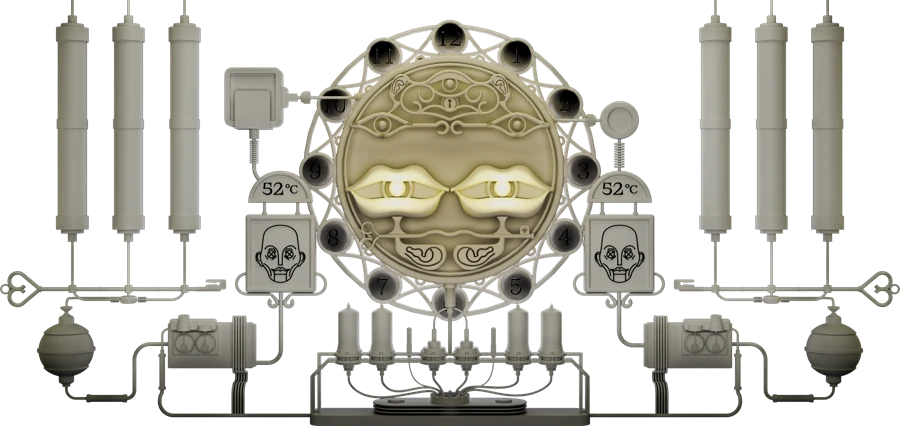
This is the heart of the mechanical civilisation. Resources, the products of labour, and even discarded individuals are fed into the furnace and compressed into pulses of energy that sustain the world. They travel through pipes to every production area, driving the birth of the next generation.
02.Genesis Workshop
The energy core constantly issues instructions as robotic arms assemble new life according to a fixed program. Mechanical rabbits, pigs, and other production units are manufactured here. From their components to their identities, everything has already been determined by the system.
03.Becoming Machine
Newly created individuals undergo modification and calibration here. The system repairs faults, strengthens structures, and implants a unified behavioural logic, turning them into more efficient production tools. Every “upgrade” brings them closer to perfection and further from themselves.
04.The Great Observer
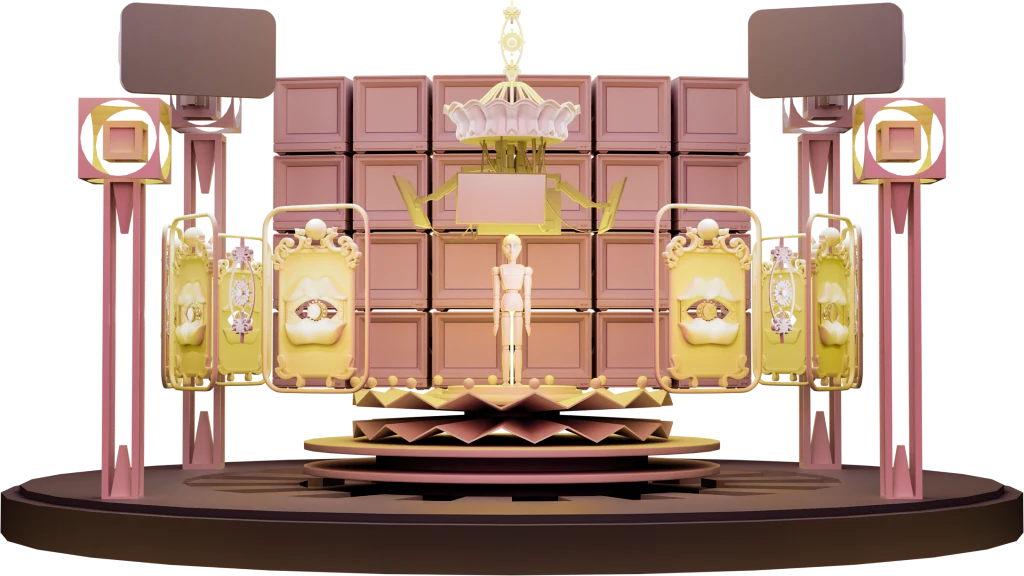
The surveillance core at the centre of civilisation watches everything. Every movement, task, and pause is recorded and converted into rating data that determines an individual’s future. It never gives orders, because everyone has already learned to obey.
05.Emotional Core
After an individual passes every test, the system installs emotional and personality modules. Happiness, fear, anticipation, and belonging are written into programs, becoming another source of energy that keeps it working.
06.The Devourer
This is the endpoint of the rating system. Monitoring screens replay an individual’s life while a giant mechanical creature delivers the final judgement. Those who fail to meet the standard are devoured, dismantled, and returned to the production cycle.
Explore more
Back to all work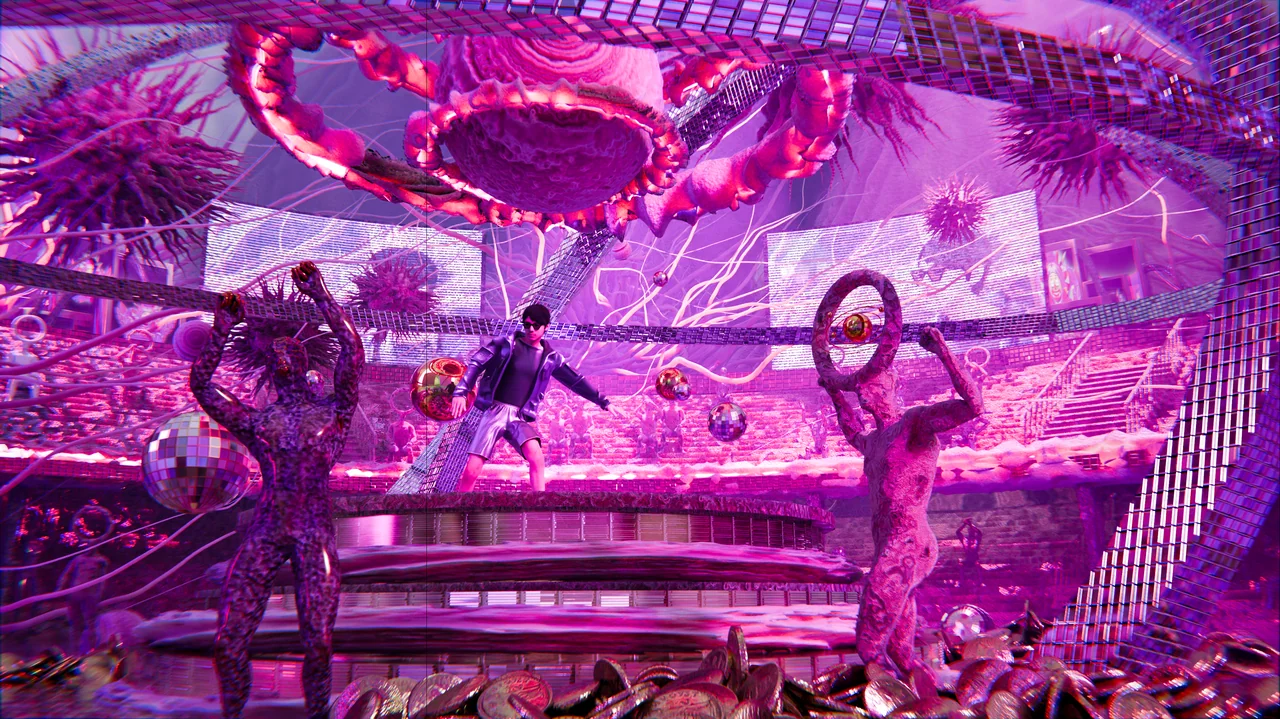
The Big Bang Stigma
Read case studyTranslating research on illness stigma into an interactive journey through identity, recruitment, and livestream performance.
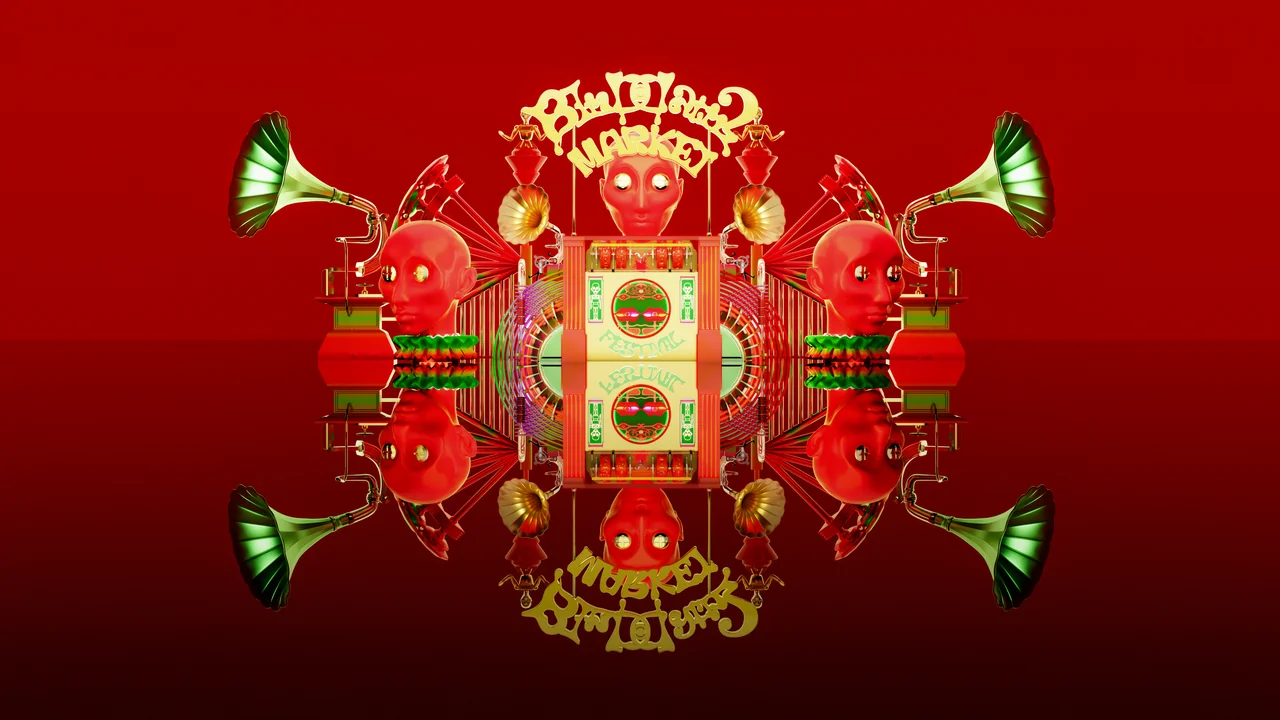
Blind Dating Market Festival
Read case studySix connected scenes explore how self-presentation, conditional matching, and social judgement shape intimate relationships.