2024 / XR / Interaction · Collaborative project
The Big Bang Stigma
An interactive exploration of labels, bodies, and the gaze
This project examines illness stigma in recruitment, social media, and mass communication. Research into stigmatisation, entertainment, and romanticisation becomes a continuous XR narrative experience.
Identity generation, recruitment screening, live interaction, and data generation connect participant choices, bodily actions, and system feedback, making abstract social bias tangible and participatory.
- My contribution
- Interaction and visual design within a collaborative project
- Project stage
- Research, XR experience design, and installation prototypes
From medical terminology to popular entertainment
The project begins with internet slang, short videos, and entertainment. Terms such as OCD, depression, and social anxiety are detached from their clinical context and used as jokes or labels. Increased visibility can coincide with a simplified understanding of illness.
Research then examines misunderstanding, exclusion, shame, and employment discrimination. Comparing patient and public perspectives reveals how language can affect participation, identity, and daily life.
Misunderstanding
Social exclusion
Illness-related shame
Entertainment consumption
Romantic imagery
Examining perceptions through public responses
“When anxiety is treated as an everyday mood, I feel my illness is being trivialised, and worry that sharing my experience will be seen as oversensitivity.”Trivialisation / hesitation
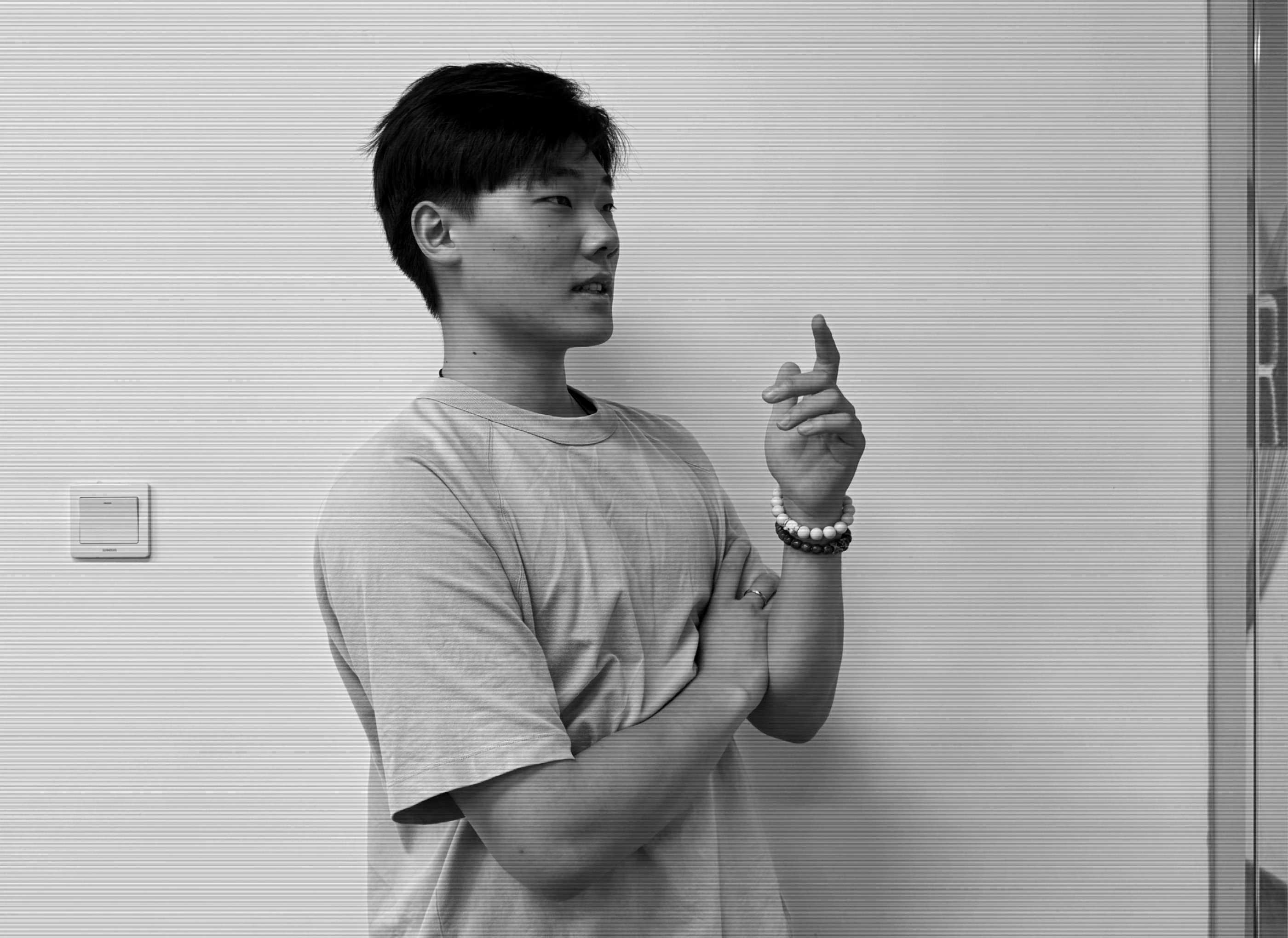
“Frequent jokes about illness make people overlook its seriousness. Even without ill intent, they can make it harder for patients to be understood.”Reduced awareness / misunderstanding
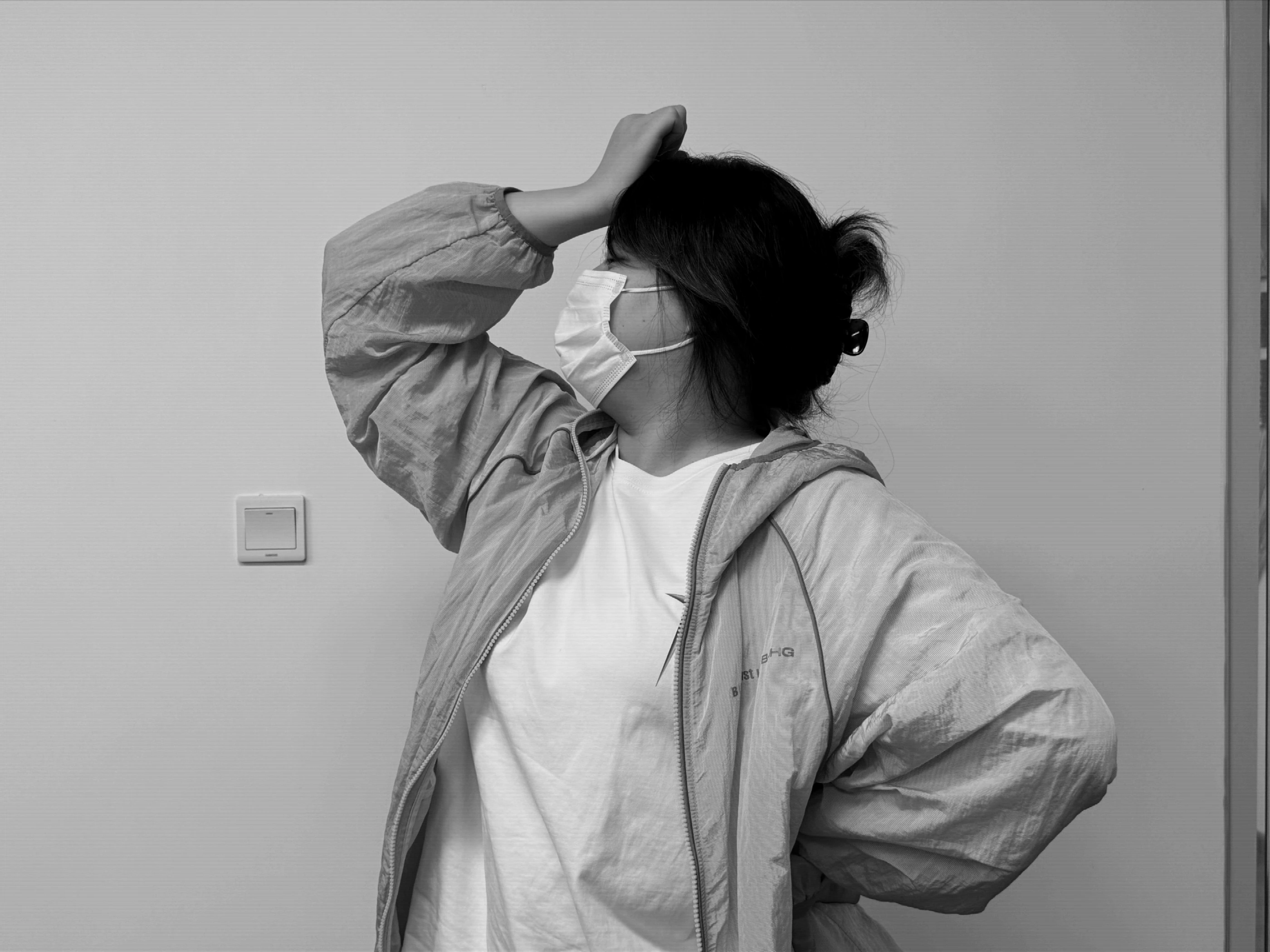
“Seeing depression used as a joke or label is uncomfortable. The reality is more complex, and it makes me less willing to talk about my experience.”Labelling / shame

“I used to treat social anxiety and OCD as internet slang, rarely thinking about actual patients. Later I realised this could reinforce stereotypes.”Unconscious humour / stereotypes
How do you view illness names used as jokes or popular labels?
Do these expressions affect understanding of illness and patients?
What specific effects do these expressions have on people with lived experience?
Illness stigma can hide in everyday language, jokes, and judgements.
When labels replace the person
Stigma starts with distorted perceptions and grows through language, behaviour, and media. Four mechanisms—perception, expression, action, and circulation—are translated into three experiential stages.



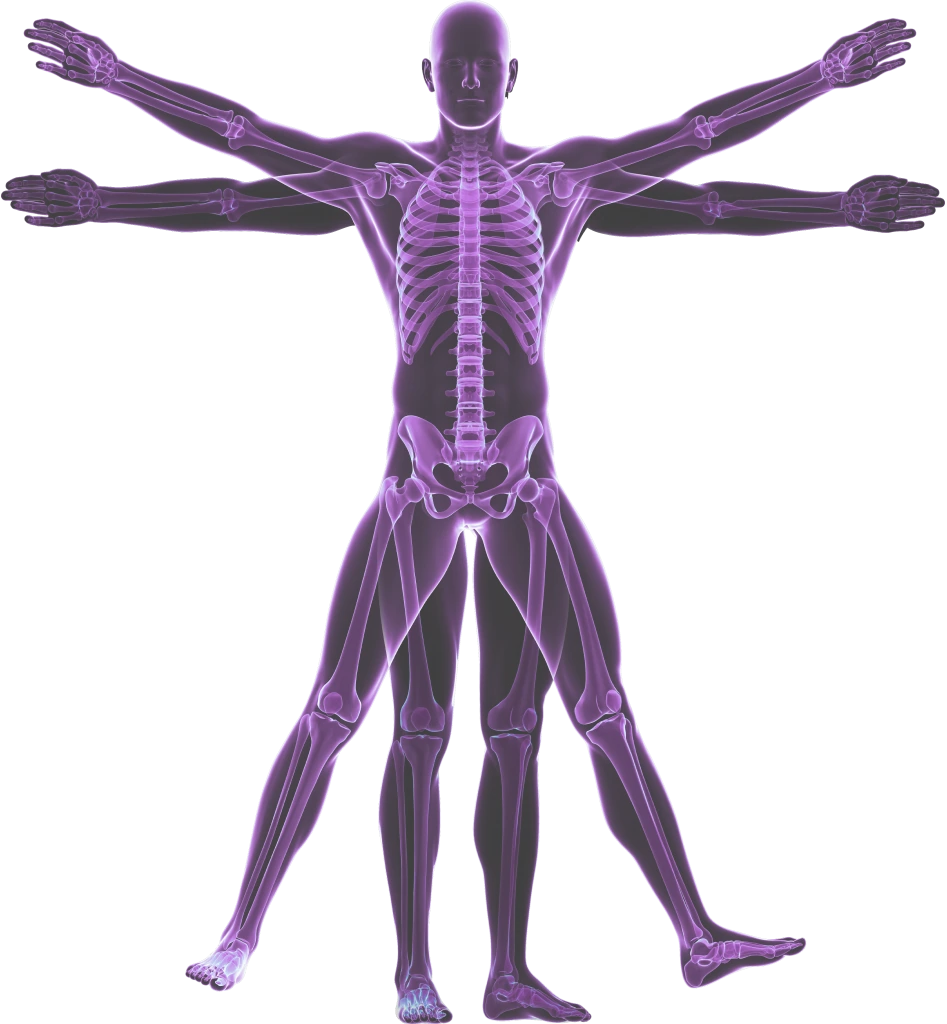
Defined / excluded
Watched / consumed
Beautified / reconstructed
- 01Perception
Missing information and simplified traits allow labels to replace the person.
- 02Expression
Language turns illness names into jokes, insults, or identity labels.
- 03Action
Avoidance, exclusion, and mockery turn bias into behaviour.
- 04Circulation
Media amplification and repeated memes entrench simplified assumptions.
Scenario focus: employment
Research identifies the effects of illness labels on identity judgements, information filtering, and opportunity. Employment connects identity entry, screening, public scrutiny, and visual reconstruction into one continuous experience.
How can a participant experience the influence of illness labels on identity and opportunity?
The observer becomes an experiential role.
Control over identity and outcomes progressively decreases.
Behaviour affects later feedback; implicit judgements become visible.
From illness labels to identity reconstruction
The XR journey begins with a fictional patient identity, then moves through recruitment screening, livestream performance, and data reconstruction. Changing feedback and control reveal how labels affect identity and social circumstances.
01 Identity assessment
Questionnaire and facial inputs create a fictional illness identity and profile, shifting the participant into an experiential role.
02 Stigmatisation: screening
A VR recruitment test embeds illness labels in screening rules, carrying each choice into the employment outcome.
03 Entertainment: livestream
The participant performs for audience instructions and ratings. Recorded bodily actions turn identity into content.
04 Romanticisation: reconstruction
Accumulated identity, behaviour, and bodily data become an artistic portrait and aesthetic symbols.
Enter information → seek employment → perform → view the result
Generate identity → screen labels → give live feedback → reconstruct data
Identity and behaviour from one stage become inputs to the next.
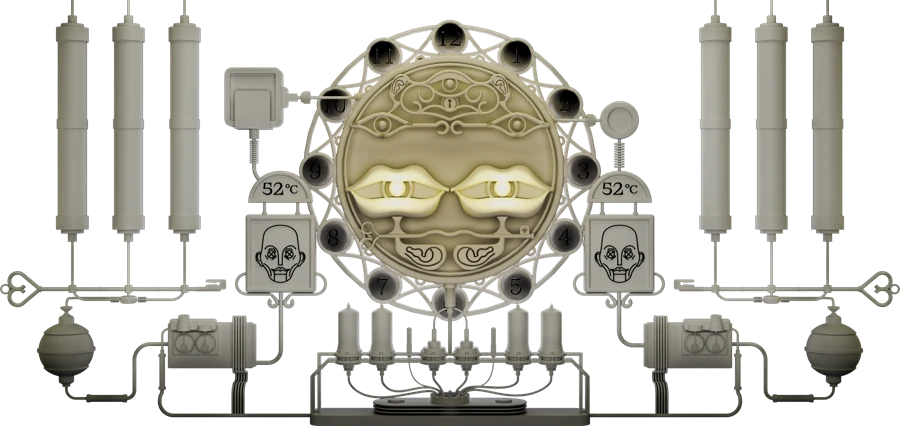
Identity assessment & profiling
A questionnaire and facial capture combine personal information, responses, and facial data into a fictional identity and profile. This profile becomes the starting point for screening and feedback, positioning the participant as a “patient job seeker”.
- 01Information entry
- 02Facial capture
- 03Feature analysis
- 04Profile modelling
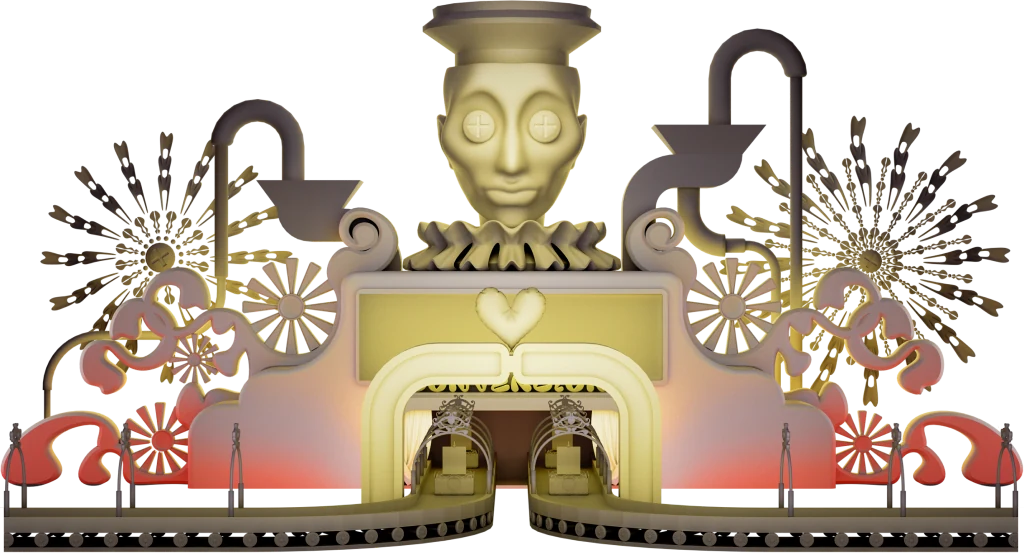
Stigmatisation: employment screening
In the VR interview, participants identify and select words. Neutral or accurate terms are harder to obtain, while stigmatising words accumulate in the profile and influence the employment outcome. A seemingly objective process turns bias into restricted opportunity.

- User actions
Aim → identify → select
- System rules
Weight → time limit → accumulation
- Immediate feedback
Hit → record → prompt
- Final outcome
Restriction → obstruction → rejection
Entertainment: from job seeker to performer
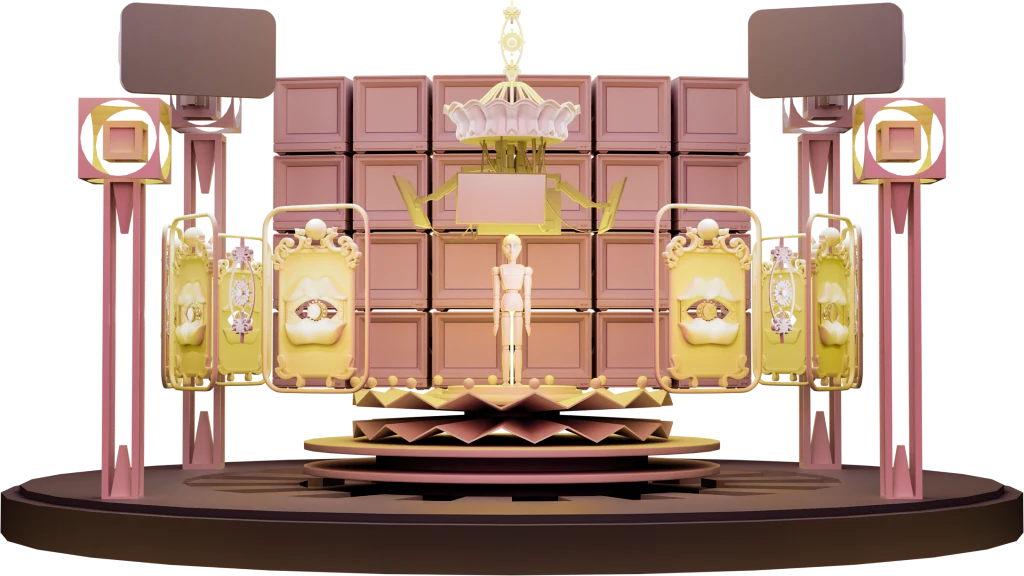
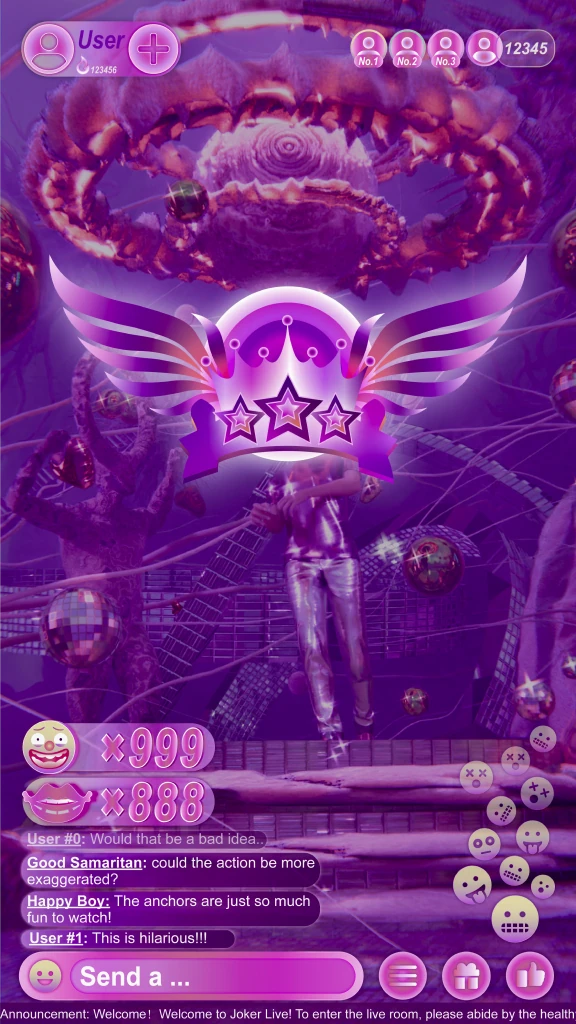
On the virtual stage, movement tasks connect the performer to audience instructions and ratings. Kinect and pressure sensors record movement and force; feedback and accumulated data feed identity upgrades and the final visual output.
The exaggerated stage places the performer at the centre of surrounding viewers. Character traits, bodily differences, and visual symbols heighten the relationship of watching and judgement, reflecting illness turned into public entertainment.
Interaction flow
01 / Select an icon
Audience members select icons to issue movement instructions or ratings.
02 / Movement demonstration
The system demonstrates an action for the performer to imitate.
03 / Complete the action
Movement recognition produces feedback and accumulates the result.
04 / Level up
Repeated tasks raise the livestream level and unlock later stages.
05 / Identity upgrade
The “patient streamer” becomes an “art streamer”, moving from scrutiny to repackaging.
06 / Final stage
Accumulated identity and behaviour data are carried into the artistic output.
Romanticisation: the person becomes an aesthetic symbol
The installation receives accumulated identity, labels, movements, and bodily feedback, translating them into visual parameters. Progressively restricted sensory input deepens immersion while data shapes the emerging digital identity.
How data enters the final portrait
Identity / illness labels / movement / bodily feedback
Data mapping / parameter extraction / weighting / visual generation
Contours / features / form changes / identity reconstruction
01 Contour generation
Facial inputs establish the basic digital contour and structure.
02 Feature reconstruction
As sensory inputs are progressively restricted, the system reconstructs features and identity.
03 Artistic translation
Illness labels, movement data, and visual parameters produce the artistic portrait.
When illness is beautified, is its lived reality being obscured?
Installation & making
Explore more
Back to all work
Blind Dating Market Festival
Read case studySix connected scenes explore how self-presentation, conditional matching, and social judgement shape intimate relationships.

Poisonous Mushrooms
Read case studyContributing concept, environment, and storyboard design to Deng Zexi’s music video, with a visual extension into a promotional mini-game.